
Environmental

Environment
Significance
With a continued commitment to conducting business alongside seeking opportunities to expand investments in environmentally friendly businesses, the DEMCO Group has increased its investments in renewable energy—including wind, solar, and biomass—to help reduce air pollution and greenhouse gas emissions associated with fossil fuels, a major contributor to global warming.
In addition, the DEMCO Group’s steel structure pole manufacturing facility places strong emphasis on environmental performance by operating under an ISO 14001 environmental management system, reflecting the Group’s commitment to environmental sustainability.
Overall, the DEMCO Group’s management approach is guided by the ESG framework, focusing on three core areas—Environment, Social, and Governance—to strengthen the organization and support sustainable growth.
Strategies for Success
DEMCO is upgrading its environmental management in line with global trends to drive business growth through environmental responsibility across the value chain. The focus includes reducing greenhouse gas emissions, improving resource efficiency through circular economy practices in operations, and increasing the share of revenue from investments in environmentally friendly businesses that support emissions reduction.
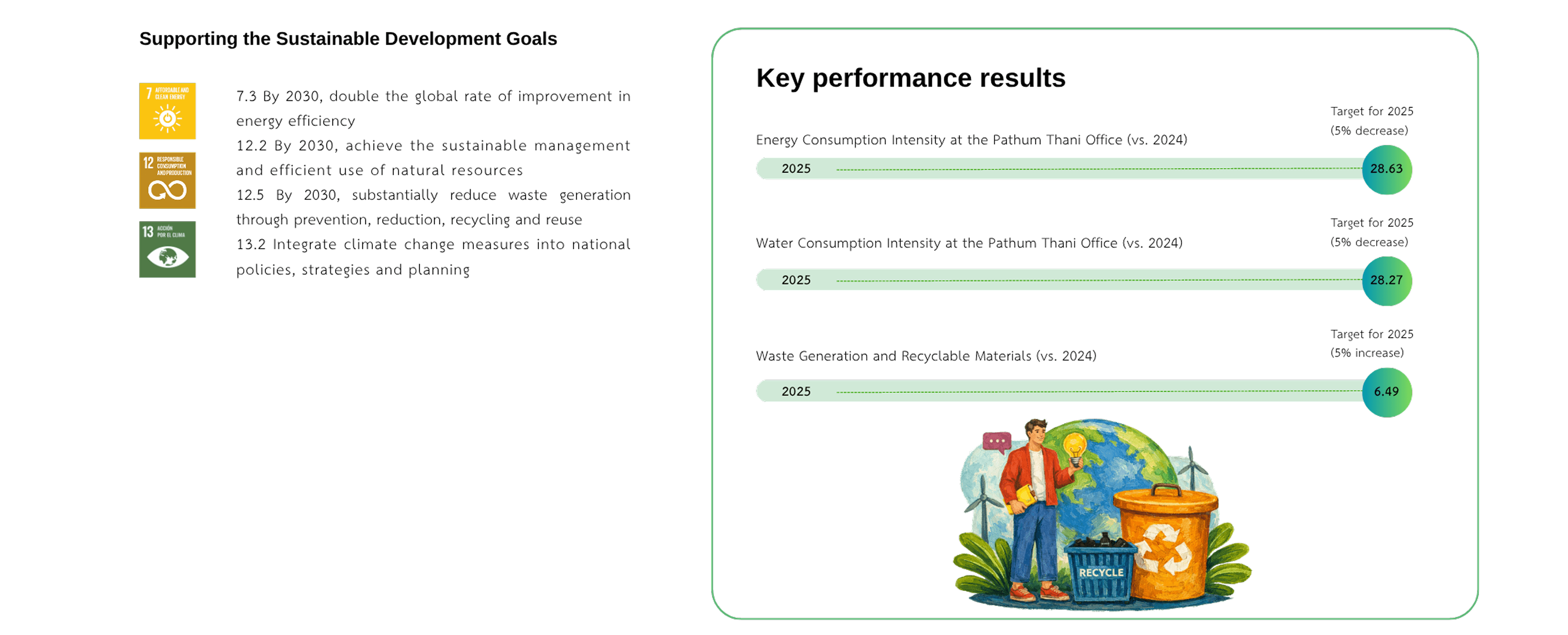
To support progress toward the United Nations Sustainable Development Goals (SDGs), DEMCO has defined SDG-related goals and priorities. DEMCO’s environmental focus aligns with SDG 6 (Clean Water and Sanitation), SDG 12 (Responsible Consumption and Production), and SDG 13 (Climate Action).
Environmental Practices
DEMCO is committed to conducting business responsibly toward the environment by preventing adverse impacts and using resources efficiently through an integrated environmental management system. The system covers energy use, air quality, water management, and waste management, and promotes efficient and sustainable resource use in line with circular economy principles. The objectives are to enhance resource efficiency across the value chain, reduce greenhouse gas emissions, and strengthen climate change resilience..
DEMCO also prioritizes minimizing environmental impacts from its operations and construction projects by considering pollution control, safety, and potential visual impacts on operational areas, communities, and local authorities. Appropriate prevention and control measures are implemented based on site-specific conditions.
Energy Management
Energy Management Policies and Guidelines
Energy demand continues to rise as energy remains a key driver of economic activity, business operations, and modern lifestyles. DEMCO recognizes the importance of energy efficiency and is committed to developing an internal energy management system to support sustainable energy conservation. The Company has established clear energy management policies and practices focused on improving energy efficiency and reducing unnecessary consumption.
In parallel, DEMCO explores and applies clean energy technologies and innovations to enhance operational efficiency and support future growth. DEMCO also continuously monitors and evaluates performance against indicators aligned with relevant international guidelines and standards to drive ongoing improvement and promote efficient energy use. These efforts support a balanced approach between business growth and long-term environmental protection.
| Risk factors arising from energy use | Energy management measures |
|---|---|
| Excess energy consumption due to inefficient usage behaviors |
|
| Energy transition and stakeholder expectations (demand for clean energy and reduced emissions) |
|
Actions to Reduce Energy Consumption
DEMCO prioritizes efficient electricity management by implementing measures to reduce energy consumption and enhance sustainable operational processes, including:
- Promoting efficient energy use: Implement ongoing energy conservation campaigns to raise awareness of responsible resource use, and set designated schedules for switching lighting on and off in key office buildings to improve energy efficiency.
- Building awareness and participation among employees and contractors: Communicate best practices and promote consistent application of energy-saving behaviors at workplaces and project sites through regular engagement activities.
- Expanding renewable energy use: DEMCO plans to install additional solar power generation capacity. The existing system at the Pathum Thani office (currently 265 kWp) will be upgraded to increase the share of renewable electricity, reduce reliance on grid power, and lower greenhouse gas (GHG) emissions. These efforts support DEMCO’s long-term goal of achieving Net Zero Emissions and reflect the Company’s commitment to sustainable business development through reduced use of non-renewable energy and the promotion of clean energy.
Energy Conservation Performance within the Organization
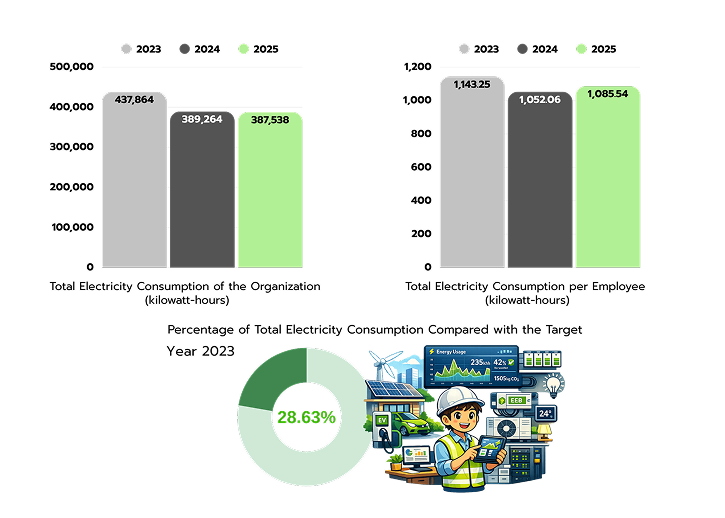
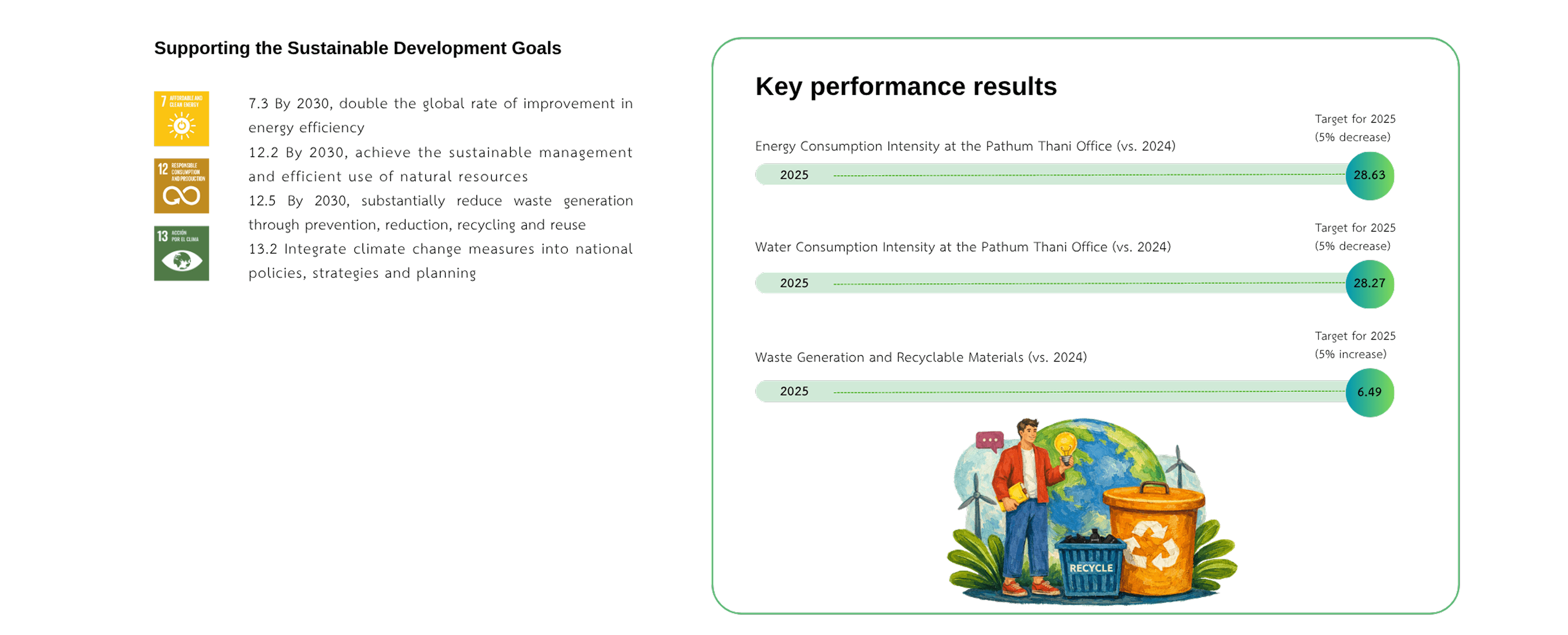
Demco set a target to reduce the use of externally sourced electricity by 5.00%. In 2025, total electricity consumption amounted to 387,538 kilowatt-hours (kWh), comprising 276,592 kWh from external sources (71.37%) and 110,946 kWh from renewable energy (28.63%). Externally sourced electricity consumption per employee was 1,085.57 kWh, representing a slight increase from the previous year. This change was attributable to higher operating volumes and increased business activities during the reporting year.
Demco remains committed to implementing ongoing energy management measures, including increasing the share of renewable energy, improving energy efficiency, and closely monitoring energy consumption, in order to achieve its external electricity reduction target effectively in subsequent periods and to support long-term sustainable business operations.
Water management
Water Management Approach
DEMCO recognizes the importance of sustainable water resource management, a critical issue at both national and international levels, in support of Sustainable Development Goal 6 (SDG 6). The Company is committed to promoting efficient and effective water management, while supporting access to sufficient and quality water for all sectors of society.
Amid the impacts of climate change and increasing risks of water scarcity, DEMCO prioritizes a systematic approach to internal water management through the development of a comprehensive process covering all operational stages. Key measures include ensuring wastewater quality meets applicable standards prior to discharge, promoting water reuse and recycling where appropriate, and conducting ongoing water conservation and sustainability campaigns. These actions enhance water-use efficiency while contributing to the conservation and restoration of natural water resources, reflecting DEMCO’s commitment to responsible resource use and long-term environmental sustainability.
Actions to Reduce Water Consumption
DEMCO prioritizes efficient water management, with the aim of reducing water consumption and enhancing water management practices in the Company’s buildings. Key measures include selecting water-saving equipment—such as installing sanitary ware and faucets certified with the Energy Efficiency Label No. 5 (e.g., washbasin faucets designed to limit water flow to no more than 2 liters per minute)—and promoting water conservation through awareness signage that encourages employees to use water responsibly.
| Water-related risk factors | Water management measures |
|---|---|
| Water scarcity / water-use restrictions in project areas | Conduct project-specific water risk assessments prior to commencement. Identify alternative water sources and develop seasonal water-use plans, as appropriate. Set water-reduction targets and establish procedures to respond to water-use restrictions. |
| Wastewater quality not meeting standards prior to discharge | Segregate stormwater from wastewater systems. Provide settling/sedimentation ponds and wastewater treatment systems for workers’ camps, as applicable. Monitor wastewater quality in accordance with the monitoring plan, record results, and implement corrective actions when non-compliance is identified. |
| Waterlogging at construction sites affecting safety and work continuity | Design drainage systems and pumping arrangements, and prepare contingency plans for heavy rainfall/flash floods. Regularly inspect high-risk areas and implement stop-work measures when conditions are unsafe. Adjust work plans based on weather forecasts and on-site conditions. |
Operating Performance in 2025
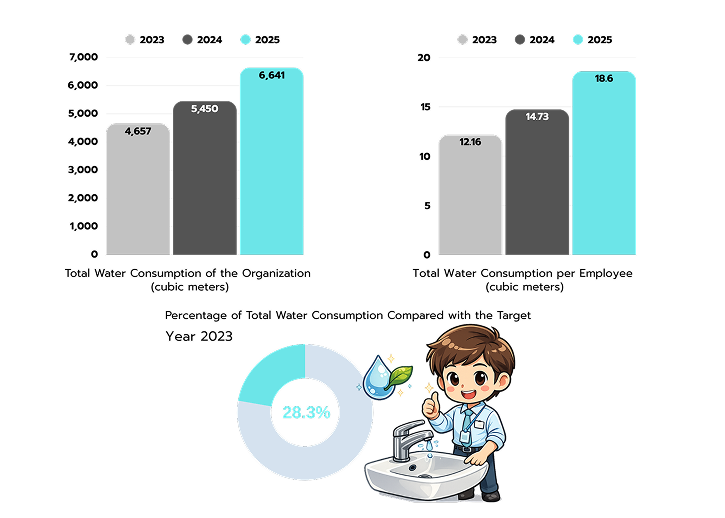
DEMCO set a target to reduce water consumption at its Pathum Thani headquarters by 5% compared with 2024, with the aim of promoting efficient resource utilization and continuously enhancing environmental management performance.
In 2025, DEMCO’s total water consumption amounted to 6,641 cubic meters, increasing from 5,450 cubic meters in 2024. All water used during the reporting year was supplied from municipal water sources. When considered on a per-employee basis, water consumption was 18.60 cubic meters per person, increasing from 14.65 cubic meters per person in 2024. As a result, water consumption in 2025 was approximately 28.3% above the target set by the Company.
Such change was consistent with the increase in operational activities and resource utilization within the organization. Although the performance achieved during the reporting year did not meet the established target, the Company continued to implement control measures and improve water use efficiency, including water-saving campaigns, inspections for leakage in the building’s water supply system, and regular monitoring of water consumption data. These measures were undertaken to slow the upward trend in water usage and to further improve the efficiency of resource management in the periods ahead.
Wastewater Management
DEMCO does not generate wastewater from production processes, as its business operations primarily involve engineering services and project management. Most water consumption occurs in office premises, and wastewater is treated through the building’s wastewater treatment system in compliance with applicable legal requirements.
Waste and Discarded Materials Management
Guidance on Waste Management
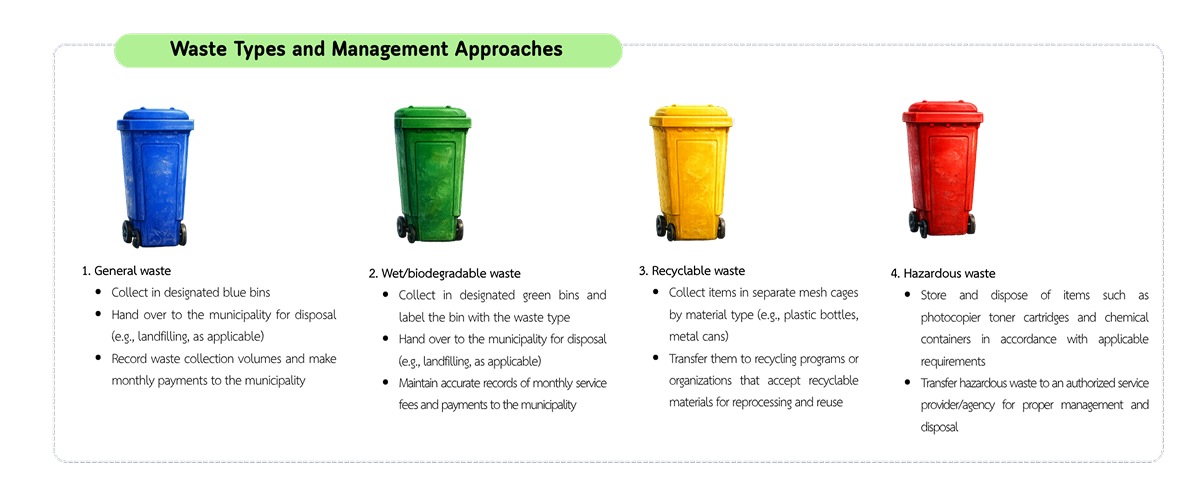
DEMCO is committed to managing waste in accordance with applicable legal requirements and relevant international standards, with the aim of improving resource efficiency and reducing environmental impacts across its business processes. This commitment is implemented through a systematic waste management approach, including continuous monitoring, evaluation, and periodic review to enhance and refine practices as needed. In addition, DEMCO promotes communication and awareness among employees by integrating the 4Rs (Reduce, Reuse, Recycle, Replace) into daily operations to strengthen resource efficiency and support DEMCO’s waste reduction goals.
ประเภทของของเสียและแนวทางการจัดการ
Actions to Reduce Waste and Discarded Materials
DEMCO prioritizes digital transformation to reduce resource consumption and enhance organizational efficiency. Technology plays a key role in streamlining workflows, reducing paper use, promoting efficient resource utilization to minimize waste, and avoiding chemicals that may pose risks to health and the environment. Key measures include transitioning to paperless meetings by providing documents via QR codes for download, printing double-sided and only when necessary, using reusable glasses and water pitchers instead of plastic bottles for internal meetings, and avoiding foam food packaging at all meetings.
| Risk issues arising from waste management | Waste management measures |
|---|---|
| Improper waste segregation reduces recycling rates and increases disposal costs | Waste segregation points are clearly designated with separate labeled/color-coded bins, supported by office and worksite standards, training for employees and contractors, regular inspections, and prompt corrective actions for improper disposal. |
| Hazardous waste (e.g., used oil, paint/thinner, batteries, chemicals) spills may contaminate soil and water | Hazardous waste is stored separately in a designated, waterproof area with secondary containment, properly labeled with SDS and spill kits available, and disposed of only through authorized service providers. |
| High volumes of construction and demolition waste (e.g., scrap materials, steel, cables, concrete, soil) may affect surrounding areas and communities | A Material and Waste Management Plan is prepared before project commencement, procurement is controlled to minimize waste, and storage areas are organized to maximize reuse and recycling where feasible. |
| Inconsistent employee and contractor participation may reduce the effectiveness of 4Rs implementation | The 4Rs (Reduce, Reuse, Recycle, Replace) are continuously communicated and promoted, supported by pre-entry orientation/training, project-level waste reduction targets, recognition of strong performance, and regular on-site monitoring. |
Waste Reduction and Waste Management Performance
In 2025, Demco generated a total of 15,244.50 kilograms of waste and discarded materials, decreasing from 15,846 kilograms in 2024, reflecting an improving trend in waste management efficiency. The amount of waste recycled was 989 kilograms, representing 6.49% of total waste, increasing from 4.61% in 2024. This exceeded the target to increase the recycling proportion by 5% compared with the previous year, demonstrating tangible progress in waste segregation and resource recovery.
In addition, 2025 marked Demco’s first year of collecting data and setting targets for food waste management. The Company set a target to reduce food waste by 5% compared with 2024, with a target level of 2,562.15 kilograms. Actual performance showed total food waste of 595 kilograms, which was 76.78% below the target, reflecting effective control and management of food waste in the initial implementation year.
Demco continues to focus on reducing waste at source, improving proper segregation, and increasing the proportion of waste diverted for reuse and recycling, supporting efficient resource utilization and the ongoing reduction of environmental impacts.

Outstanding Projects in 2025
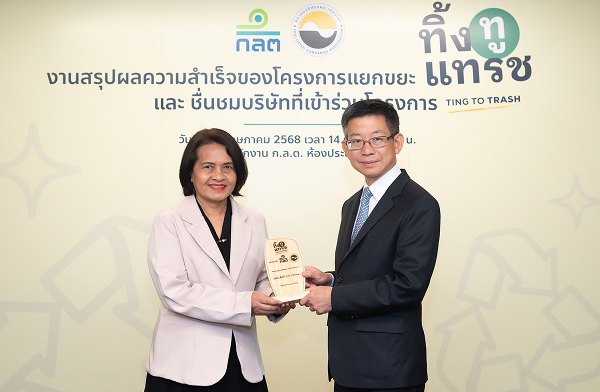
DEMCO has continuously participated in the “Ting To Trash” project, organized by the Securities and Exchange Commission (SEC) and the Thai Listed Companies Association, since 2023. The project aims to strengthen environmental awareness within the organization, promote proper waste management practices, encourage waste segregation for effective management, and enhance employee engagement in sustainable environmental stewardship. DEMCO uses the “ECOLIFE APP” to record data and track waste management performance and progress.
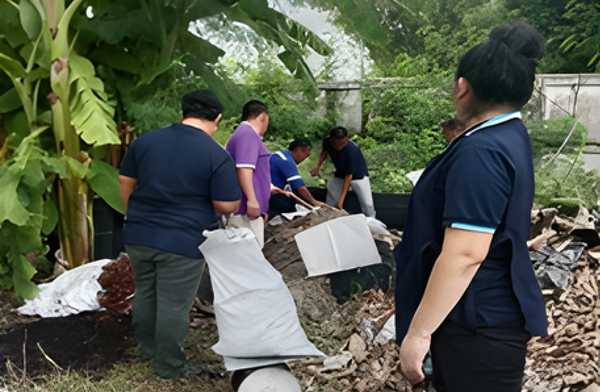
DEMCO continuously manages leaf waste by using leaves from site maintenance to produce compost, thereby increasing resource utilization and reducing the volume of waste requiring disposal. The Company set a target to produce 1,000 kilograms of leaf compost and, in 2025, produced a total of 1,178 kilograms, exceeding the target and demonstrating the effectiveness of its internal organic waste management.
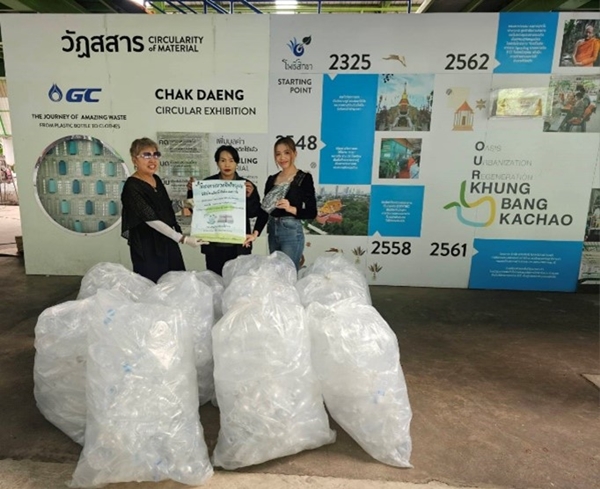
DEMCO supported sustainable plastic waste management by participating in the “Mindful Bottles for Charity” project at Wat Chak Daeng, Samut Prakan. Used plastic bottles were donated for recycling into fibers to produce blankets for donation, helping to reduce waste and promote resource circularity. The project was conducted from 1 July 2025 to 31 October 2025. During this period, DEMCO collected 1,320 plastic bottles, totaling 26.8 kilograms, reflecting strong employee collaboration in advancing environmental and social responsibility while delivering tangible benefits to the community.
Significance
DEMCO recognizes its environmental responsibility and is committed to preventing and minimizing adverse impacts on ecosystems in the areas where it operates. The Company promotes ecosystem and biodiversity conservation to support the long-term availability of natural resources for future generations. To ensure consistent implementation across the organization, DEMCO has established a Biodiversity Management Policy to guide its biodiversity management practices.
Biodiversity Management Policy
The DEMCO Group is committed to sustainable business operations grounded in environmental responsibility. The Group prioritizes and promotes the protection of ecosystems and biodiversity to conserve natural resources for future generations. Accordingly, DEMCO has established the following Biodiversity Management Policy:
- Committed to environmental and biodiversity management in compliance with applicable laws, requirements, and relevant regulations.
- It mandates controlling, preventing, and reducing environmental impacts through the sustainable use of resources, conserving biodiversity, and preventing pollution at its source.
- Promote the continuous adoption of innovative, efficient, and environmentally friendly technologies in business operations. Support community development by listening to the views of communities and stakeholders in line with human rights principles and engaging in ongoing dialogue. Those directly affected and relevant agencies involved in the Company’s project development should work together to mitigate impacts on ecosystems and biodiversity.
- Provide management and employees with the knowledge and understanding necessary to raise biodiversity awareness.
- Promote the transfer of technological knowledge to stakeholders to support the review and continuous improvement of environmental management processes and to enhance the effectiveness of management and quality control for sustained environmental performance.
Guidelines for Biodiversity Management
Demco recognizes its environmental responsibility and places importance on protecting ecosystems and biodiversity in all areas where it operates. The Company aims to avoid and minimize potential adverse impacts arising from its activities throughout the value chain through environmental risk assessments conducted prior to project commencement, and through design and planning processes that take ecologically sensitive areas into consideration. Demco also establishes control, prevention, and restoration measures in accordance with the mitigation hierarchy (avoid–minimize–restore).
The Company ensures continuous monitoring and evaluation of biodiversity performance, together with stakeholder engagement involving communities and relevant authorities, to maintain an appropriate balance between economic growth and the conservation of natural resources. Demco’s goal is to conserve, restore, and responsibly steward natural resources for long-term sustainability for future generations.
Biodiversity Performance
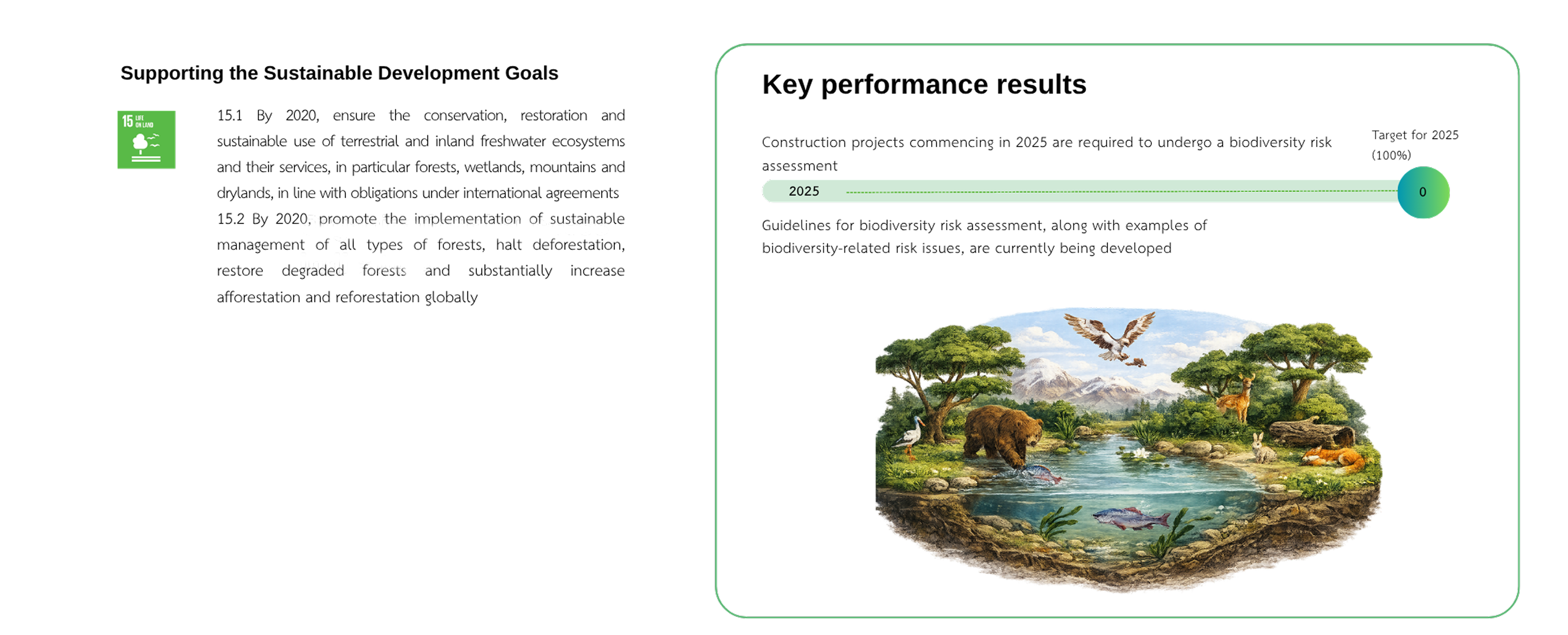
Demco set a target requiring 100% of construction projects initiated in 2025 to undergo a biodiversity risk assessment prior to commencement, in order to prevent and mitigate potential impacts on ecosystems and biodiversity. However, during the reporting year, one construction project was initiated and the biodiversity risk assessment had not yet been conducted. This was due to the Company being in the process of updating its Project Risk Management Manual to incorporate a more comprehensive and systematic biodiversity risk assessment procedure.
Demco plans to implement the revised manual as the guiding framework for assessing construction projects initiated from 2026 onwards.
Biodiversity Capacity Building for Employees
Demco places importance on strengthening employees’ knowledge and understanding of biodiversity issues to support the systematic integration of biodiversity into the Company’s risk management process and construction project execution. Demco sent employees to attend the training program “Biodiversity and Sustainable Business Operations (for Practitioners)”, organized by the Securities and Exchange Commission, Thailand (SEC) in collaboration with the Biodiversity-Based Economy Development Office (Public Organization) (BEDO). The program aimed to enhance knowledge, awareness, and practical approaches for applying relevant tools to manage biodiversity impacts across the value chain.
Significance
The world is experiencing increasingly severe and frequent natural hazards—such as droughts, floods, and storms—driven by climate change. These events can affect natural resources and may disrupt the continuity of DEMCO’s business operations. Accordingly, DEMCO is committed to preparing for and responding to climate-related risks and opportunities, in alignment with the Sustainable Development Goals (SDGs), particularly SDG 7 (Affordable and Clean Energy), SDG 12 (Responsible Consumption and Production), and SDG 13 (Climate Action).
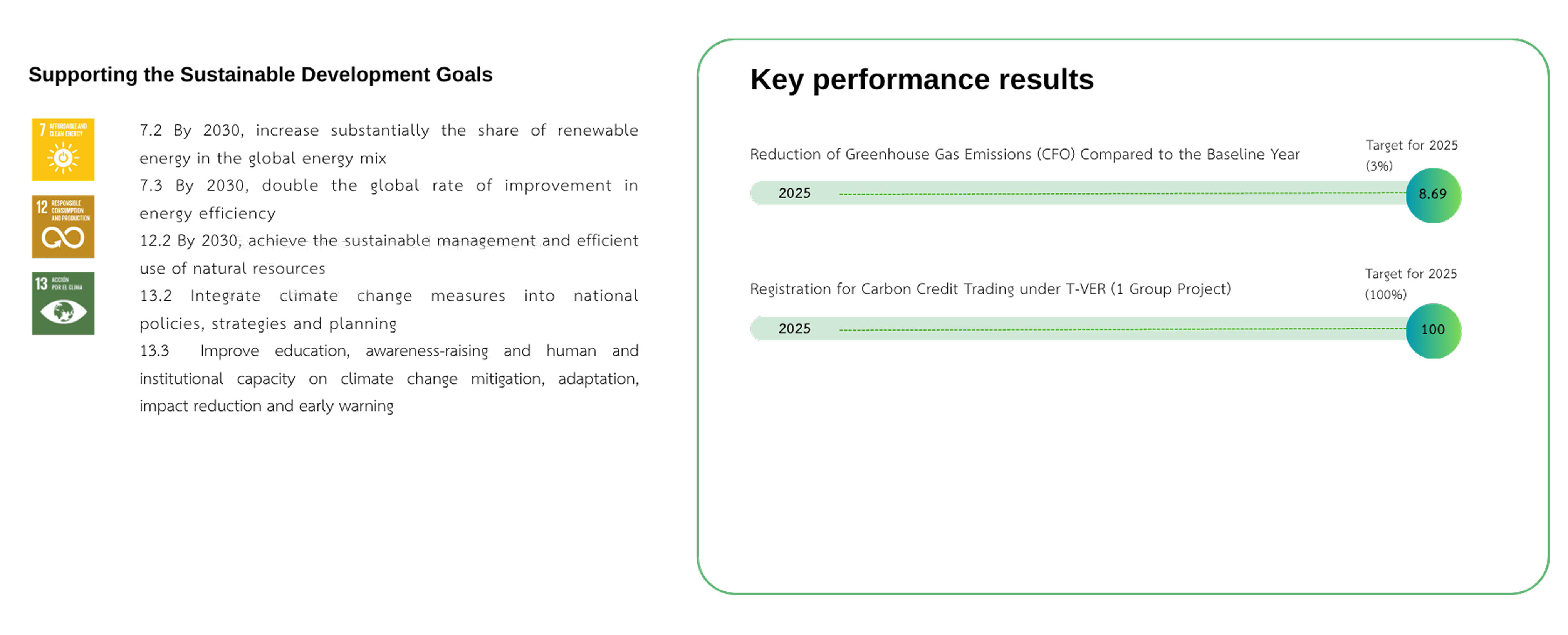
Key Strategies for Success
DEMCO has defined Strategy S2: Increasing Revenue Through Investment, focusing on expanding revenue from both domestic and international investments while undertaking projects and initiatives that support greenhouse gas (GHG) emissions reduction, including:
- Reduce greenhouse gas (GHG) emissions from operational processes and improve energy efficiency across the organization.
- Assess climate-related risks and opportunities and define mitigation actions in line with the Thailand Climate Financial Disclosure Standard (TCFD).
- Increase investment in a diversified clean energy portfolio by prioritizing electricity projects with zero or very low carbon emissions and applying advanced, environmentally friendly technologies to ensure stable generation capacity.
Greenhouse Gas (GHG) Management Practices
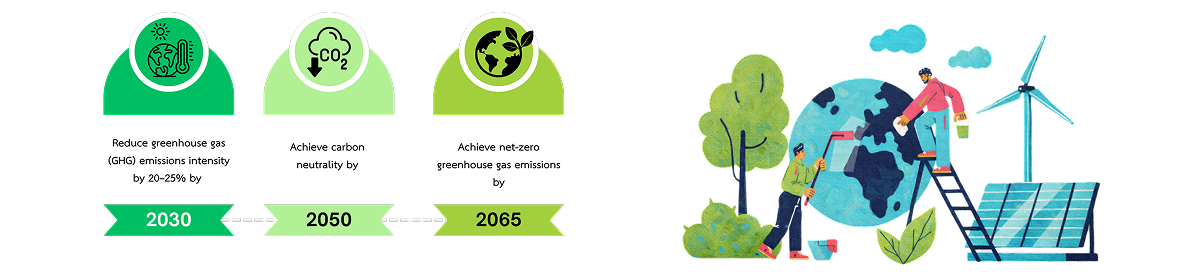
Demco is advancing toward a low-carbon business to support sustainable development and mitigate the impacts of climate change. The Company has set a quantitative target to reduce greenhouse gas (GHG) emissions by 20–25% by 2030 compared with the 2022 base year, and aims to achieve carbon neutrality by 2050, as well as net zero emissions by 2065.
To achieve these targets, Demco continuously improves energy efficiency across its operations, promotes the use of clean and renewable energy, increases the proportion of investments in environmentally friendly projects, and systematically assesses and manages climate-related risks. Progress is monitored and action plans are reviewed on a regular basis.
Disclosure of Greenhouse Gas Emissions Data
Climate change and the increasing frequency of natural disasters—such as storms, floods, droughts, and extreme weather variability—may adversely affect energy infrastructure, construction project execution, and power generation performance. This is particularly relevant to renewable energy projects that depend on natural conditions, such as fluctuating solar irradiance and wind speed, which may cause energy output to fall short of forecasts and affect revenue, business continuity, and the Company’s ability to achieve long-term strategic objectives. At the same time, more frequent and severe extreme weather events may result in damage to infrastructure, construction sites, and corporate assets, and may also impact the safety of employees and contractors, site accessibility, and the transportation of materials and equipment. These impacts may lead to project delays, supply chain disruptions, and an inability to execute operations in accordance with planned schedules. In addition, volatility in natural factors may cause electricity generation to deviate from forecasts, affecting revenue, cash flows, and business continuity, while increasing maintenance and restoration costs and insurance expenses. Such developments may ultimately affect competitiveness and long-term sustainability.
In 2025, Demco continued to enhance its climate change risk management capabilities. The Company developed a Climate Risk Framework and defined relevant risk categories covering both physical risks and transition risks, and conducted a TCFD Gap Analysis to align its practices with internationally recognized disclosure guidance. Demco also began integrating climate-related risks into its Enterprise Risk Management (ERM) and project management processes. Key tools developed include a Scenario Impact Matrix for climate scenario impact analysis, a project risk assessment form linked to the Risk Register, and the initial design of a Climate Risk Dashboard to monitor relevant indicators and targets. As a result, Demco has significantly strengthened its readiness in terms of governance structure, strategy, and climate risk management systems, enhancing its ability to systematically identify, assess, and monitor climate-related risks. Going forward, these efforts are expected to increasingly inform strategic decision-making, project planning, and operational risk management more clearly from 2026 onward.
Disclosure of Greenhouse Gas Emissions Data
- Organizational Greenhouse Gas Emissions
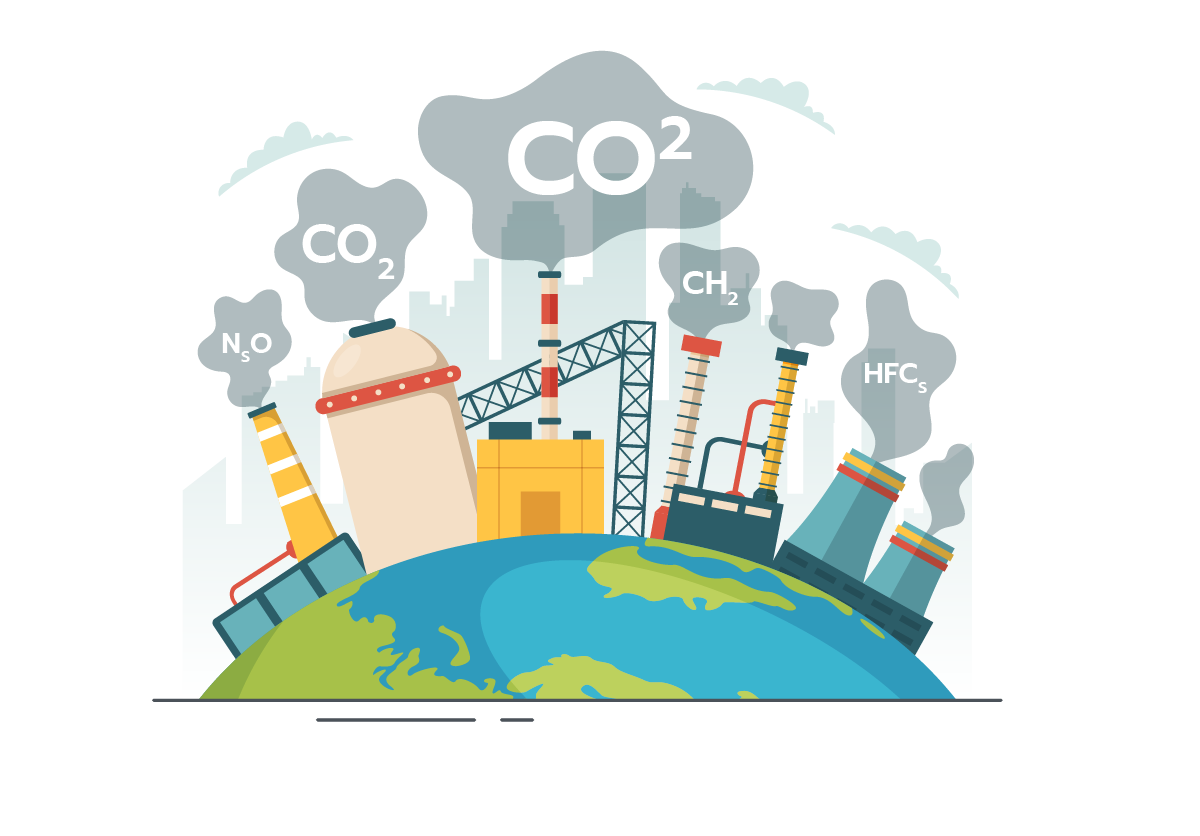
In 2025, Demco collected data to assess greenhouse gas (GHG) emissions arising from operational activities at its headquarters in Pathum Thani Province. Emissions were classified into three categories in accordance with the reporting scopes: Scope 1 (direct emissions), Scope 2 (indirect emissions from electricity consumption), and Scope 3 (other indirect emissions), and are reported in tonnes of carbon dioxide equivalent (tCO2e). The emission sources under each scope are presented in the following table.
Scope 1 Scope 2 Scope 3 Use of Diesel B7 for generators
Use of Gasohol 95 for lawn mowers and high-pressure water sprayers
Use of LPG for welding activities
Use of Diesel B7 for company vehicles
Use of Gasohol 91 for company vehicles
Use of Gasohol 95 for company vehicles
Use of Gasohol E20 for company vehicles
Use of Diesel B7 for forklifts
Use of CO₂ fire extinguishing agent
Use of BF2000 fire extinguishing agent
Leakage of refrigerant used (R32)
Leakage of refrigerant used (R410a)
Leakage of refrigerant used (R134a)
Methane leakage from the company’s wastewater treatment system
Purchased electricity consumption Employee commuting
Provision of employee shuttle bus services
- Greenhouse Gas Emissions Performance Report
Demco set a target to reduce total greenhouse gas (GHG) emissions by 3% compared with the base year, in support of its low-carbon business direction and the continuous enhancement of energy management efficiency.
In 2025, Demco’s total GHG emissions (Scopes 1, 2 and 3) amounted to 1,114 tonnes of carbon dioxide equivalent (tCO2e), decreasing from the 2023 base-year level of 1,220 tCO2e. This represents a 8.69% reduction and is below the target threshold, reflecting the effectiveness of systematic measures to control energy and resource consumption. When disaggregated by scope, Scope 1 and Scope 2 showed a significant downward trend—particularly Scope 2 (electricity consumption)—driven by improved energy efficiency and the promotion of renewable energy. Scope 3 remained broadly in line with the base year, with ongoing monitoring of material categories.The emissions intensity was 0.5045 tCO2e per THB 1 million of revenue. Details by scope and reporting year are presented in the following table.
scope Greenhouse gas emissions for the
year 2023
(tons of carbon dioxide equivalent)Greenhouse gas emissions for the
year 2024
(tons of carbon dioxide equivalent)Greenhouse gas emissions for the
year 2025
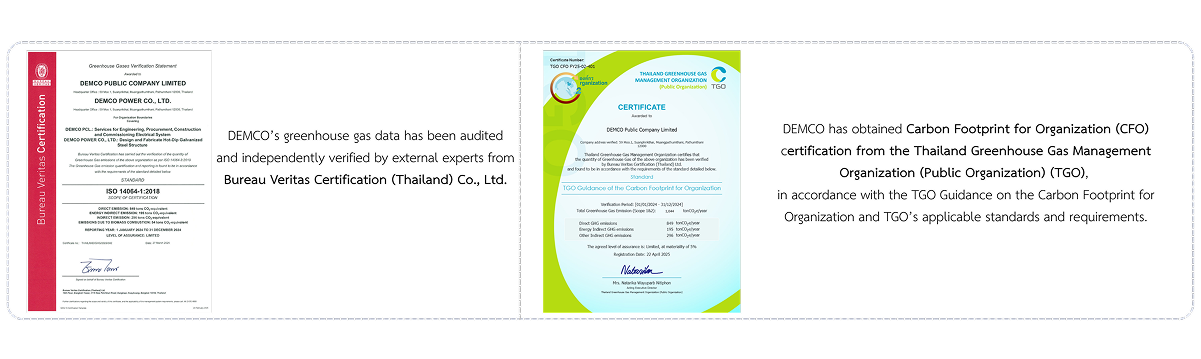
(tons of carbon dioxide equivalent)Scope 1 (tonCO2e) 695.00 849.00 666.00 Scope 2 (tonCO2e) 219.00 195.00 130.00 Scope 3 (tonCO2e) 306.00 296.00 318.00 Scope 1+2 (tonCO2e) 914.00 1,044.00 796.00 Including all 3 scopes 1,220 1,340 1,114 Carbon intensity (Scope 1+2+3) 0.5303 tonCO2eq / ล้านบาทรายได้ 0.4172 tonCO2eq / ล้านบาทรายได้ 0.5045 tonCO2eq / ล้านบาทรายได้ The 2025 greenhouse gas (GHG) emissions data were prepared in accordance with ISO 14064-1:2018 under a systematic data management and quality control process, with Advance Energy Plus Co., Ltd. (AEP) serving as the Company’s consultant for report preparation. The data are currently undergoing external verification to enhance transparency, accuracy, and credibility for stakeholders, and the Company will formally disclose the verification results once the process is completed.
To drive tangible progress on climate change management, Demco has established guidelines and implemented ongoing, systematic initiatives to reduce greenhouse gas (GHG) emissions. These efforts cover direct emission reductions from operations, support for carbon offset projects, community engagement, and the development of employee knowledge and capabilities in line with international sustainability standards and trends.
These actions reflect Demco’s commitment to integrating business growth with environmental and social responsibility, with an emphasis on delivering measurable, transparent, and verifiable outcomes. This includes reducing GHG emissions, supporting certified carbon credit mechanisms, and strengthening readiness for disclosure in accordance with relevant sustainability reporting standards.
- Management Activities to Reduce Greenhouse Gas Emissions
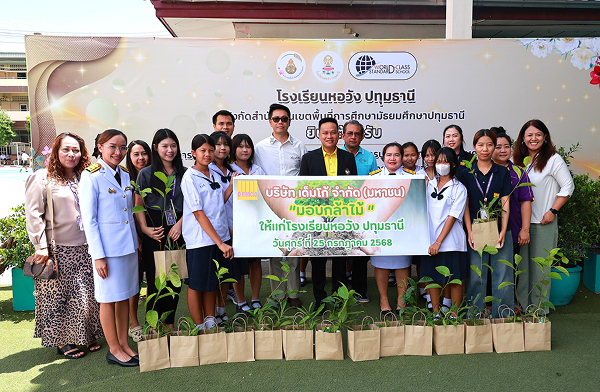
To promote environmental stewardship and community collaboration, DEMCO has continuously donated saplings for the past six years. In 2025, the Company donated 50 saplings to Horwang School, Pathum Thani, to support tree planting within the school grounds, raise environmental awareness, and foster community responsibility for the sustainable use of natural resources.
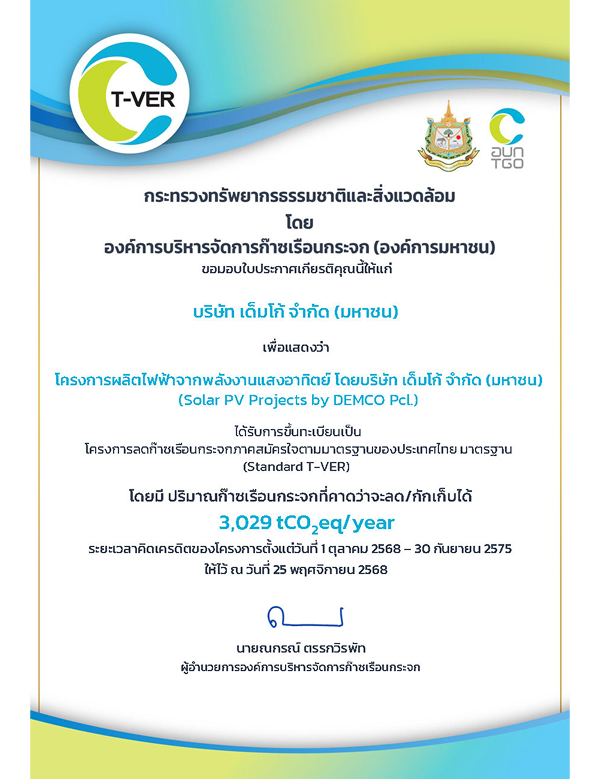
The Company has implemented a solar power generation project and registered it as a voluntary greenhouse gas reduction project under Thailand’s T-VER standard, under the supervision of the Thailand Greenhouse Gas Management Organization (Public Organization) (TGO). The project is expected to reduce and/or remove approximately 3,029 tCO₂e per year, with a crediting period from 1 October 2025 to 30 September 2032.

The Company sent employees to attend training on IFRS S1 and IFRS S2 to enhance their knowledge of ESG- and climate change-related financial disclosures and to prepare for reporting in compliance with these standards. The Company has also begun developing a roadmap to define the approach, steps, and implementation plan for systematic reporting in line with the standards.
Significance
DEMCO recognizes that construction material selection directly influences environmental impacts throughout a project’s life cycle—from sourcing and transportation to installation, operation, and end-of-life demolition and disposal. Accordingly, the Company is committed to promoting the use of environmentally friendly construction materials, prioritizing materials certified under recognized environmental labeling schemes and/or relevant standards. This approach supports responsible procurement, reduces natural resource consumption, lowers greenhouse gas emissions, and helps minimize construction waste.
From a governance perspective, DEMCO has established policies and practices for managing environmentally friendly construction materials in alignment with the Company’s sustainable development goals. These cover material specifications during the design phase, the selection of environmentally responsible vendors and contractors, certification documentation and traceability, and project monitoring to ensure that materials used are high quality, safe, and effective in minimizing environmental impacts.
Sustainable Materials Management Guidelines
Demco has established an environmentally friendly construction policy as a guiding framework for the Group’s operations, with the objective of systematically controlling and reducing environmental impacts arising from construction activities. The policy covers key aspects including design, procurement, material selection, waste management, efficient energy use, and greenhouse gas (GHG) emission reduction. Demco requires relevant functions to integrate these principles into routine operational processes, supported by the establishment of key performance indicators and continuous performance monitoring, to ensure that the Company’s construction activities align with sustainable development principles and the expectations of all stakeholder groups.
Management approach
Demco manages environmentally friendly construction under the circular economy and sustainable development framework by systematically integrating environmental principles into design, procurement, and construction operations. The Company has established Green Procurement practices to control vendor selection and material sourcing in line with environmental criteria, such as choosing materials that improve energy efficiency, reduce greenhouse gas (GHG) emissions, and avoiding materials containing hazardous substances. In addition, Demco requires environmentally friendly material alternatives to be considered from the project design stage, with clear accountability and continuous performance monitoring to ensure alignment with the Company’s environmental objectives.
Performance in 2025
In 2025, Demco implemented two construction projects that applied materials and technologies designed to reduce environmental impacts. The Company selected heat-reflective materials, such as specially coated metal sheet roofing, which can reflect more than 95% of heat and reduce surface temperature by more than 10%. Examples of such projects include:
- ABP Project (under construction)
- Alpha2 Project (in design phase)
In this regard, Demco has established guidelines for selecting environmentally friendly materials as a standard for future projects, in order to continuously enhance the environmental performance of its construction activities.